
Cenote Cenote · only cenotes
The cenote guide: every cenote, explained.
What a cenote is, how it formed, which ones to visit and how to swim safely.
Start here
What is a cenote?
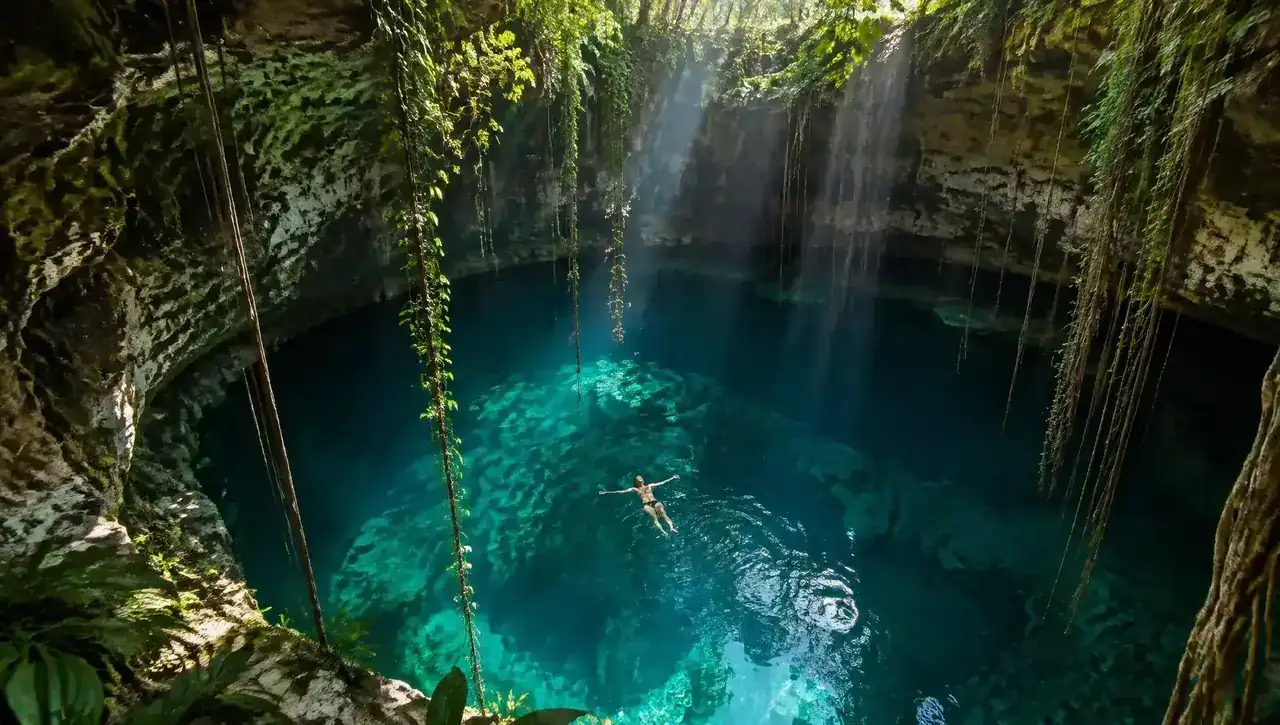
A cenote is a natural sinkhole where the limestone roof of a cave collapsed and exposed the groundwater below. In English it is usually described as a water-filled sinkhole or natural well. The Yucatán Peninsula has thousands of them, and the ancient Maya saw them as sacred gateways to the underworld.
- Pronounced
- seh-NO-tay (often misspelled "senote")
- From the Maya word
- ts'onot (well)
- Main region
- Yucatán Peninsula, Mexico
- Types
- Cave, semi-open, open, ancient
Types of cenotes
Cave
Water inside an underground cave, light from a small opening.
Semi-open
Part of the roof fell; sunbeams pour in.
Open
Roof fully collapsed, like a jungle lake.
Ancient
The oldest stage, now lagoon-like.
Where are cenotes?
Almost all of them sit on the Yucatán Peninsula, split across three Mexican states. Similar water-filled sinkholes exist in other countries, such as the blue holes of the Bahamas, but the word cenote belongs to Yucatán. Cenote vs sinkhole →
Quintana Roo
The Caribbean coast: Tulum, Cancun, Playa del Carmen and the big cave systems.
Tulum cenotes →Cenotes near Cancun →Ruta de los Cenotes →Playa del Carmen cenotes →Cobá cenotes →Bacalar cenotes →Yucatán
Inland open and cave cenotes around Mérida, Valladolid, Homún and Chichén Itzá.
Valladolid cenotes →Cenotes near Chichén Itzá →Cenotes near Mérida →Homún cenotes →Campeche
Fewer and quieter cenotes in the west of the peninsula. Guides coming soon.
Popular cenotes to visit
From Tulum, the Ruta de los Cenotes near Cancun, Valladolid, Chichén Itzá, Homún and Mérida, with more areas added as we verify them. See all cenotes in Mexico →
Semi-open cenote
Gran Cenote
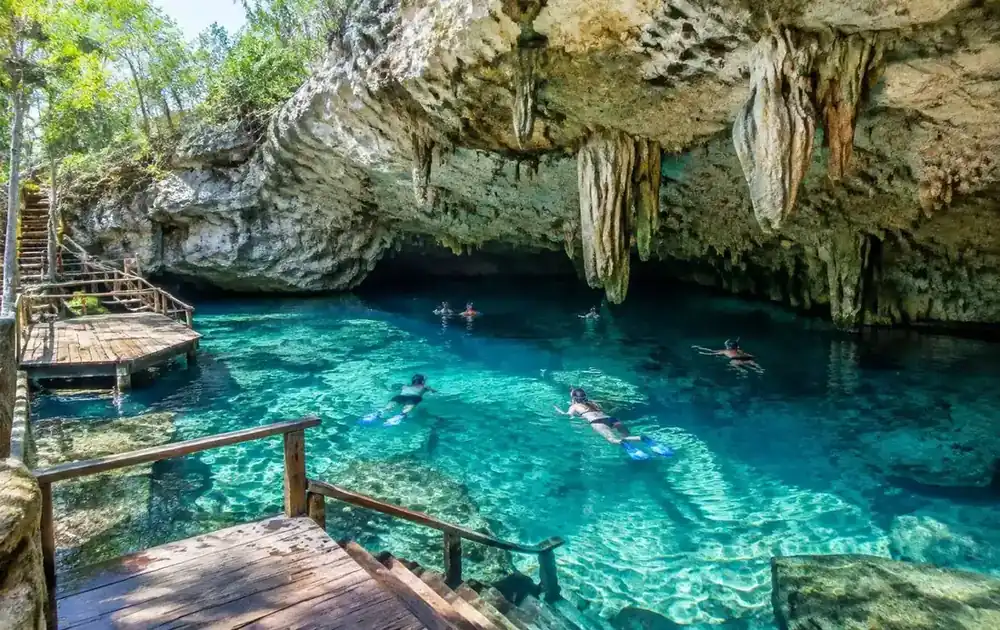
Gran Cenote (sometimes called Cenote Grande or the Great Cenote) is Tulum's most famous cenote: a semi-open pool linked by a short cavern to a second opening, with crystal-clear water, stalactites, turtles and wooden platforms. It is part of the Sac Actun cave system. Despite the name it is not huge: the swimming area is reported at about 140 m².
Cave cenote
Dos Ojos
Cenote Dos Ojos ("Two Eyes") is two neighboring cenotes joined by an underwater cavern passage of about 400 m, part of Sistema Dos Ojos, which explorers connected to the Sac Actun system in 2018, making it part of one of the longest flooded cave networks in the world. It sits inside Parque Dos Ojos, which also manages other cenotes such as El Pit, Cenote Jaguar, Nicte-Ha and Misterio Maya. It is famous among snorkelers and cavern divers.
Semi-open cenote
Cenote Calavera
Cenote Calavera (Spanish for skull), also called the Temple of Doom, is a small semi-open cenote with three holes in its limestone roof that look like a skull from above. Visitors jump about 3 m through the largest hole into deep, clear water, and cave divers come for its halocline. It is part of the Sac Actun cave system.
Open cenote
Casa Cenote
Casa Cenote, also known as Cenote Manatí, is a long, river-like open cenote that snakes through mangroves at Tankah Bay, just across a dirt road from the Caribbean. Fresh groundwater meets salt water from the sea here, making it popular for snorkeling, kayaking, paddleboarding and beginner cenote dives.
Open cenote
Cenote Zacil-Ha
Cenote Zacil-Ha (also spelled Zazil-Ha) is a small, round open cenote about 8 km from Tulum on the Cobá road. It is shallow and almost pool-shaped, with a small zipline that drops you into the water, wooden sun decks and a separate swimming pool, which makes it one of the easiest cenotes near Tulum for families and relaxed swimmers.
Open cenote
Cenote Car Wash (Aktun Ha)
Cenote Car Wash (also written Carwash), officially Aktun Ha, is a large, pond-like open cenote on the Tulum–Cobá road. The surface pool is full of water lilies, green algae, fish and turtles, and a dark cavern zone with stalactites makes it one of the most popular beginner cavern dives near Tulum. It got its nickname from local taxi drivers who once washed their cars with its water.
Open cenote
Cenote Cristal
Cenote Cristal, also called Cenote Naharon or "Crystal Cenote", is a large open cenote in the jungle about 6 km south of Tulum on Highway 307. It has clear water, wooden platforms around the edges and a jumping ledge, and it is usually quieter than the famous Cobá-road cenotes. The ticket office also sells a combo ticket for Cenote Escondido, directly across the highway.
Semi-open cenote
Cenote Siete Bocas
Cenote Siete Bocas (Cenote 7 Bocas, "seven mouths") is a semi-open cave cenote on the Ruta de los Cenotes with seven openings to the surface. Several are linked underwater, so you can swim from one opening to the next past stalactites and hanging tree roots, while divers explore a deeper cavern with light beams and fossils.
Open cenote
Cenote Verde Lucero
Cenote Verde Lucero is an open-air cenote on the Ruta de los Cenotes, known for its green water, jumping platforms and a zipline that drops you into the water. Stairs lead down to the pool, and there are palapas and picnic spots around it.
Cave cenote
Cenote La Noria
Cenote La Noria is a mostly underground cenote on the Ruta de los Cenotes. A staircase of about 10 m leads down into a cave with turquoise water, light from an opening above, a small zipline, a water swing and a high jump from the rim. It sits in a jungle park that also offers ATVs, horseback rides and a zipline circuit.
Cave cenote
Cenote Kin Ha
Cenote Kin Ha is a large underground cenote on the Ruta de los Cenotes. Wooden steps lead down into a dome where light beams fall through holes in the ceiling onto very clear water. It is popular for snorkeling, jumping and diving, inside a park with ziplines, ATVs and horseback rides, and the open Cenote Blanca Flor is nearby.
Cave cenote
Cenote Boca del Puma
Boca del Puma is an eco-park on the Ruta de los Cenotes with two cenotes to swim in, Boca del Puma and Agua Escondida, plus a jungle zipline circuit and ATV trails. Most visitors come on a package that includes transport and lunch.
Cenote science
How cenotes formed, why the water is so clear and what lives inside.
- How are cenotes formed?
- Types of cenotes
- The Ring of Cenotes
- The Chicxulub crater and cenotes
- The halocline in cenotes
- Cenote vs sinkhole
- Why is cenote water so clear?
- How deep are cenotes?
- Sac Actun underwater cave system
- The Yucatán aquifer
- Stalactites and stalagmites in cenotes
- Wildlife in cenotes
- How to pronounce cenote
- How many cenotes are there?
- El Zacatón cenote
- Cenotes in Florida
- Cenotes in Belize
- What is at the bottom of a cenote?
- The hydrogen sulfide cloud in cenotes
- Why cenotes have light beams
- Cenote vs lagoon
- Ice Age fossils in cenotes
- Can you drink cenote water?
- Threats to cenotes and how to help
- History of cenote exploration
Cenotes and the Maya
Sacred water, the rain god Chaac, the underworld Xibalba and what archaeologists found.
Visiting a cenote: the rules
- Shower before you enter; skip regular sunscreen, lotion and repellent to protect the water.
- Wear a life jacket if you are not a confident swimmer, many cenotes are deep.
- Never enter caves beyond marked areas without a certified guide.
- Bring cash; many cenotes do not accept cards.
Why the rules matter: cenotes are windows into the same underground water the region drinks, so sunscreen and waste do real damage. How the Yucatán aquifer works →
Book a tour
Visit cenotes with a guide
Transport, guide and gear included on most tours. Free cancellation on many options.
See tours and pricesCenote FAQs
What is a cenote?
A cenote (seh-NO-tay) is a natural sinkhole where collapsed limestone exposes clear groundwater. Most are on Mexico's Yucatán Peninsula.
Where are cenotes found?
Mainly in the Mexican states of Yucatán, Quintana Roo and Campeche. Popular bases are Tulum, Cancun, Playa del Carmen, Mérida and Valladolid.
Can you swim in a cenote?
Yes. Most public cenotes allow swimming and snorkeling. Shower first, skip regular sunscreen and wear a life jacket if you are not a confident swimmer.
Why is it called Cenote Cenote?
Our name repeats the word because this site is only about cenotes: every guide, map and page here covers cenotes and nothing else.
How much does it cost to visit a cenote?
Entry fees vary by cenote. On each cenote page we show the fee only when we have verified it, with the source and the date we checked.